How smarter payments can unlock global insurance growth
How smarter payments can unlock global insurance growth 1. What are the biggest payment challenges for international insurers? The travel and health insurance back office

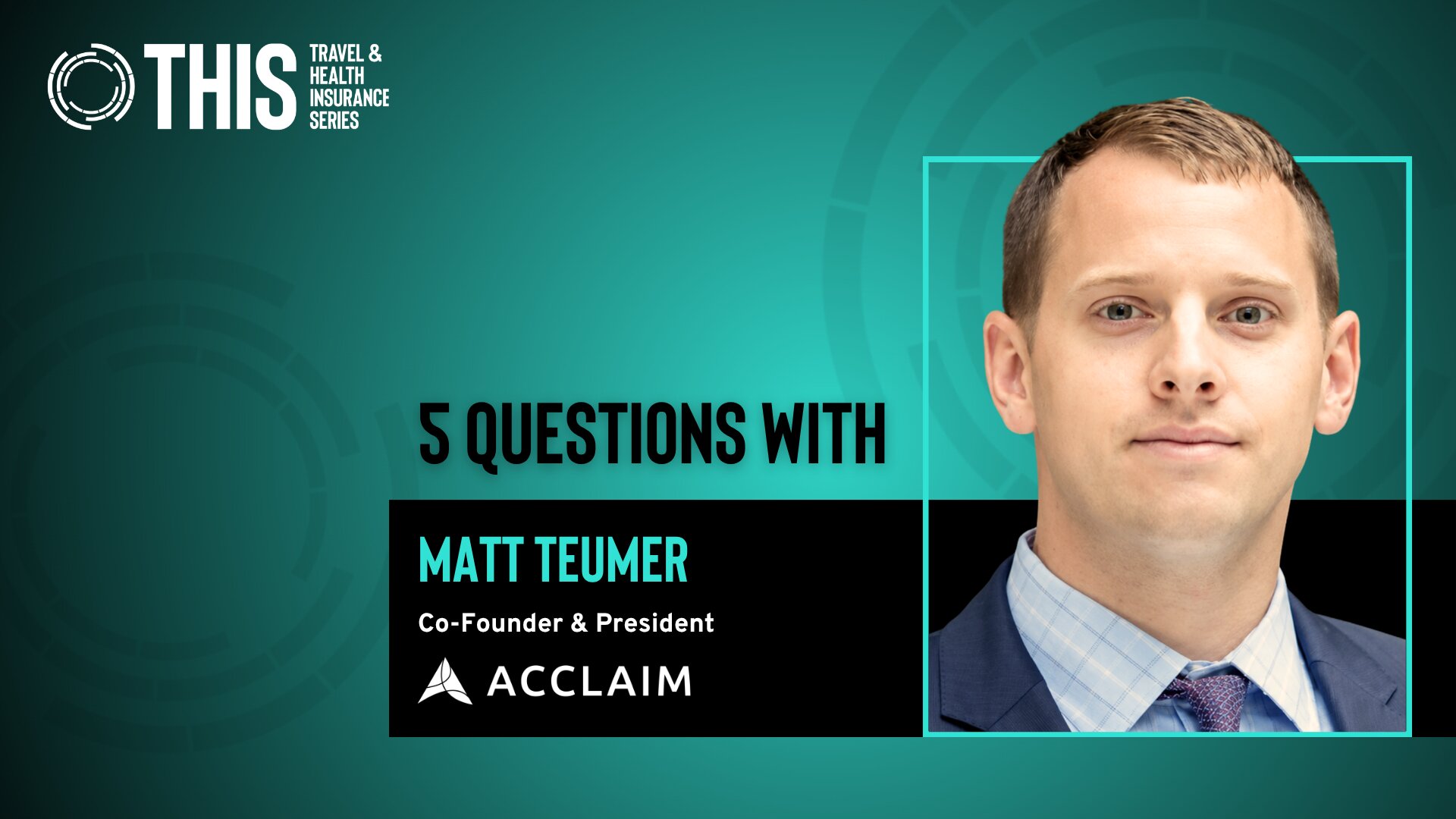
1. The insurance industry moves trillions of dollars each year, yet payments infrastructure often remains fragmented and manual. What operational or customer pressures are forcing insurers to rethink how money moves?
It’s both, and they’re reinforcing each other. On the customer side, they compare the experience to Uber and Venmo, not to other insurers because waiting five days for a cheque just feels broken now. But the internal pressure is what’s actually forcing the timeline, and it usually shows up as a specific breaking point rather than a slow realisation. It’s a new market or a new client; the current set-up simply can’t serve with no local payout method, no way to handle a currency they need. It’s an incumbent contract ending or getting repriced in a way that no longer makes sense. It’s a change on the regulatory or acquiring side that breaks a flow that used to just work. Or it’s a new finance, claims, or treasury leader walking in with a mandate to modernise and asking why the team is still reconciling by hand.
What ties all of those together is what the broken process actually costs day to day: finance teams spending hours a month manually matching bank statements, claims teams fielding ‘where’s my money’ calls because there’s no real-time status to point to, and treasury losing visibility into funds the moment they leave the building. On top of that, core-system vendors have compressed what used to be 18-month deployment cycles into 90-day sprints, so buyers now expect that same speed everywhere in their stack, including payments.
And payments itself has moved up the org chart because CFOs and COOs are expected to scrutinise it the way they scrutinise underwriting and capital management, not delegate it to a back-office team.
Either way, it’s not that the old approach failed, it’s that the business and the customer both moved past what it was built for, and that’s exactly the moment to go find something built for where they’re headed instead of where they started.
2. Insurance payments involve multiple stakeholders, jurisdictions, workflows and regulatory requirements. What makes insurance payments uniquely difficult compared to other industries, and why have traditional payment approaches struggled to keep up?
Most industries move money in one direction, to one type of counterparty, inside one regulatory footprint. Insurance moves money in three directions at once: premium coming in from policyholders, commissions going out to agents and brokers, and claims going out to members and providers, across the same book of business, the same day, in different currencies, under different regulatory regimes.
Traditional banks and industry-agnostic payment processors weren’t built for that. A bank wire or a generic PSP is built to serve one flow for one client, it doesn’t understand a policy, a capacity provider’s segregation requirement, or the difference between paying a broker and reimbursing a member. So insurers end up running premium collection through one vendor, claims through another, and commissions through a spreadsheet, with no shared view of any of it. It’s why being purpose-built for this industry, rather than adapted to it, isn’t a nice-to-have. It’s the only way to actually see and control money as it moves across all three directions instead of just the one leg a given vendor happens to touch. The gold standard is to have one source of truth for payments, treasury and reconciliation. This is what Acclaim has built and will continue to deliver to the market.
3. What is Acclaim’s broader goal in bringing this platform to market, and how do you think about the ecosystem of stakeholders involved in insurance payments?
Insurance payments touch a whole ecosystem: the carrier or MGA, TPA, the brokers and agents who need to get paid accurately and on time, the assistance companies and hospitals and provider networks on the other side of a claim, and ultimately the member or policyholder waiting on all of it to work. Historically, each of those relationships has run on its own disconnected process, so no one in that chain has a full picture, and the friction shows up as delays, manual reconciliation, and customers who have no idea where their money is.
Our strategy is to be the connective layer underneath all of it, one system where premium collection, commission payouts, and claims disbursement all live together, so every party in that ecosystem is actually working off the same information instead of their own siloed piece of it. And we’re only doing our job if that translates into something real for our clients: we don’t succeed by being useful to a back-office team, we succeed when an insurer can turn faster, more transparent payments into a genuine point of differentiation for their own customers. This means a better claims experience, more trust, a reason a policyholder stays. That’s the outcome we’re building toward, not just the transaction underneath it.
4. Can you share an example of how Acclaim has helped simplify or improve a complex insurance payment workflow – and what changed operationally as a result?
We were excited to partner with BMI Companies, an international insurer with more than 50 years in the Latin America and Caribbean market. They’d been paying claims to members and providers across their offshore international business through SWIFT wire transfers that were slow, expensive, and opaque to the people waiting on the other end. After a successful pilot with two agencies, BMI expanded Acclaim across their entire international book, and claim payments are now live through dozens of local payment methods in more than 35 countries, fully automated end-to-end and integrated directly into their core systems.
Operationally, that meant automatic validation of payment details before money moves, which cuts failed payments; real-time visibility into payment status instead of a black box; and providers who submit multiple claims now get one consolidated payment with full remittance detail, instead of reconciling a pile of separate wires by hand. BMI’s COO put it well: they didn’t want another process bolted onto the side of their core systems, they wanted a payments layer that fit directly into how they already operate. That’s the bar we hold ourselves to.
5. As insurance workflows become increasingly automated and data-driven, how do you see payment infrastructure evolving alongside them – and what role does Acclaim hope to play in that future?
The role Acclaim wants to play is different than what’s being solved today: one platform that already handles premium collection, commission payouts, and claims disbursement, so there’s nothing to stitch together in the first place. That structural difference is what actually delivers the outcomes insurers say they need right now: full control, because treasury keeps its own funds and float instead of handing it to a vendor to hold; full visibility, because there’s one reconciliation view across every dollar in and out instead of three separate reports to reassemble by hand; real cost and time savings, because local payment methods and automated validation remove both the fees and the manual work wires create; scalability, because adding a country or a currency is a configuration, not a new vendor contract; and a better experience, because the person on the other end, a customer, a provider, an agent, finally gets to choose how they’re paid instead of receiving whatever the vendor’s default happens to be. As claims processing and underwriting get smarter, the money underneath them has to keep up, on one system, or the automation everywhere else just exposes how disconnected the payments layer still is.
Share this article
How smarter payments can unlock global insurance growth 1. What are the biggest payment challenges for international insurers? The travel and health insurance back office
What does better use of data look like in travel insurance? 1. AI has moved quickly from experimentation to practical application. Where is Verisk already
"*" indicates required fields
"*" indicates required fields
"*" indicates required fields
"*" indicates required fields
"*" indicates required fields
"*" indicates required fields
"*" indicates required fields
"*" indicates required fields
"*" indicates required fields
"*" indicates required fields